Spinal Fusion
Treatment Duration
2–6 Hours
Recovery Time
4–12 Weeks
Treatment Cost
$5,000 – $9,000
Hospital Stay
3–10 Days
Treatment Type
Spinal Fusion
Specialist
Spine Surgeon
Spinal Fusion
Spine-related conditions can affect mobility, posture, strength, and overall quality of life. When conservative treatments such as medication, physiotherapy, exercise, and lifestyle modifications do not provide sufficient relief, specialized spine procedures may be recommended. Medivoyage Global helps patients access experienced spine specialists, advanced hospitals, modern diagnostic facilities, and appropriate surgical and non-surgical treatment options.
Spine treatment is highly individualized. The recommended procedure depends on the underlying condition, severity of symptoms, location of the problem, spinal stability, nerve involvement, age, general health, and previous treatment history. A detailed clinical evaluation along with imaging such as X-rays, MRI or CT scans may be required before a specialist recommends a treatment plan.
Medivoyage Global assists patients in coordinating consultations and treatment with qualified spine surgeons, orthopedic specialists, neurosurgeons, and rehabilitation teams.
Comprehensive Spine Care
The spine is a complex structure consisting of vertebrae, discs, nerves, muscles, and supporting tissues. Problems affecting any of these structures can cause back pain, neck pain, stiffness, numbness, weakness, or difficulty in movement. In some cases, spinal conditions can also affect the arms or legs because of pressure on the nerves or spinal cord.
Depending on the diagnosis, treatment may range from conservative management and physiotherapy to minimally invasive procedures and major spinal surgery. The objective is to address the underlying problem, relieve symptoms, protect neurological function, and improve mobility wherever possible.
Our medical coordination services can help patients with hospital selection, specialist consultation, appointment scheduling, medical record coordination, treatment planning support, travel arrangements, accommodation, and follow-up assistance.
Spinal Fusion
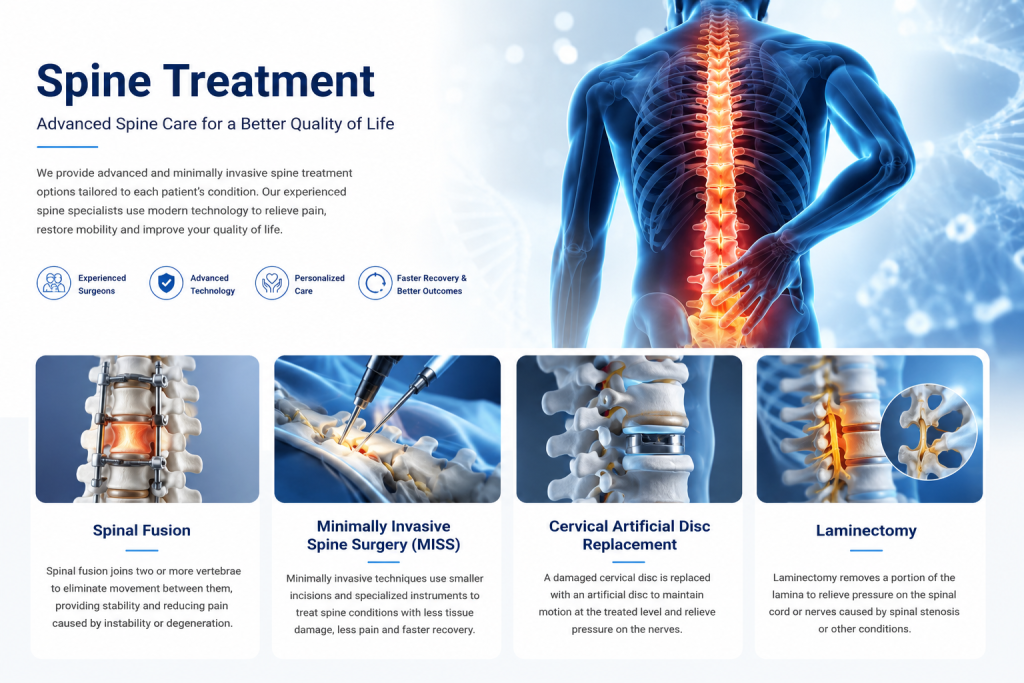
Spinal fusion is a surgical procedure used to join two or more vertebrae so that they heal into a single, more stable segment. It may be considered for certain conditions involving spinal instability, severe degenerative changes, deformity, fractures, or other problems where stabilization of the affected portion of the spine is required.
During the procedure, the surgeon places bone graft material between the affected vertebrae and may use specialized implants, screws, rods, or plates to provide stability while the bones heal.
Spinal fusion can be performed in different regions of the spine, including the cervical, thoracic, and lumbar areas. The specific surgical approach depends on the patient’s condition and the location of the problem.
Recovery varies from patient to patient and may involve a period of restricted activity followed by physiotherapy and rehabilitation. The treating spine surgeon determines the appropriate recovery plan based on the procedure and the patient’s overall condition.
Minimally Invasive Spine Surgery (MISS)
Minimally Invasive Spine Surgery (MISS) uses specialized instruments and smaller incisions to access the affected area of the spine. When clinically appropriate, minimally invasive techniques may help reduce disruption to surrounding muscles and tissues compared with certain conventional open procedures.
MISS may be used for selected spinal conditions, including some disc problems, nerve compression, spinal stenosis, and other conditions requiring surgical intervention.
Potential benefits may include smaller incisions, reduced soft-tissue disruption, less postoperative discomfort, shorter hospital stays in selected cases, and a potentially faster return to normal activities. However, minimally invasive surgery is not appropriate for every patient or every spinal condition.
A specialist evaluates imaging reports, symptoms, spinal anatomy, and overall health before determining whether a minimally invasive procedure is suitable.
Cervical Artificial Disc Replacement
Cervical Artificial Disc Replacement is a procedure designed to treat certain conditions affecting the discs in the neck. A damaged cervical disc may cause neck pain, arm pain, numbness, tingling, or weakness when nearby nerves become compressed.
During artificial disc replacement, the damaged disc is removed and replaced with an artificial disc implant. The objective is to maintain movement at the treated spinal level while addressing the damaged disc and relieving pressure on affected neural structures.
This procedure may be considered for appropriately selected patients with certain cervical disc conditions. Not every patient is a candidate for artificial disc replacement, and the decision depends on factors such as the condition of the disc, spinal alignment, neurological symptoms, and other medical considerations.
After surgery, patients may require follow-up appointments and rehabilitation according to the surgeon’s recommendations.
Laminectomy
Laminectomy is a spinal decompression procedure in which part of the lamina, a portion of the vertebral bone, is removed to create additional space around the spinal cord or nerves. It may be recommended when narrowing of the spinal canal or other structural changes cause pressure on neural tissues.
Spinal stenosis is one of the conditions for which laminectomy may be considered. Patients with nerve compression may experience back or neck pain, numbness, weakness, or difficulty walking depending on the location and severity of the compression.
In some cases, laminectomy may be combined with other procedures, such as spinal fusion, particularly when additional stabilization is required. The exact procedure depends on the patient’s diagnosis and spinal anatomy.
Advanced Spine Diagnosis and Treatment
Accurate diagnosis is an important part of successful spine care. Before recommending surgery, specialists generally evaluate the patient’s symptoms, medical history, physical examination findings, and imaging results. MRI, CT scans, X-rays, and other diagnostic tests may be used when clinically necessary.
Modern spine care also includes advanced surgical techniques, navigation systems, specialized implants, and minimally invasive approaches for suitable patients. These technologies can help surgeons plan and perform complex procedures with greater precision.
However, advanced technology is only one part of treatment. Choosing the appropriate procedure and ensuring proper postoperative rehabilitation are equally important.
Rehabilitation After Spine Treatment
Recovery does not necessarily end when the surgical procedure is completed. Depending on the treatment, patients may require physiotherapy, controlled exercises, activity modification, and regular follow-up consultations.
Rehabilitation can help patients gradually improve mobility, strength, flexibility, and functional independence. The rehabilitation program is customized according to the patient’s procedure, physical condition, age, and recovery progress.
Patients should follow their surgeon’s instructions regarding lifting, exercise, driving, work, and other activities during the recovery period.
Why Choose Medivoyage Global for Spine Treatment?
Choosing the right hospital and specialist is an important part of planning spine treatment, particularly for international patients. Medivoyage Global helps patients navigate the medical travel process by coordinating access to appropriate healthcare providers and supporting them throughout their treatment journey.
Our services can include:
- Specialist consultation coordination
- Hospital and treatment-center selection
- Medical report and imaging coordination
- Treatment planning assistance
- Appointment scheduling
- Travel and accommodation coordination
- Local assistance during treatment
- Post-treatment follow-up coordination
Our goal is to make the process more organized and convenient for patients and their families while helping them connect with appropriate medical professionals.
Your Spine Treatment Journey
Whether you require Spinal Fusion, Minimally Invasive Spine Surgery, Cervical Artificial Disc Replacement, or Laminectomy, the appropriate treatment depends on your individual diagnosis and medical condition. A qualified spine specialist should evaluate your medical reports and determine whether surgery or another treatment approach is appropriate.
At Medivoyage Global, we help patients coordinate their medical journey from initial consultation through treatment and follow-up care. By connecting patients with experienced specialists and suitable healthcare facilities, we aim to make access to specialized spine treatment simpler and more convenient.
If you are considering spine treatment, share your medical reports, imaging results, and previous treatment details with Medivoyage Global. Our team can help coordinate your case with the appropriate specialists for further evaluation and treatment planning.